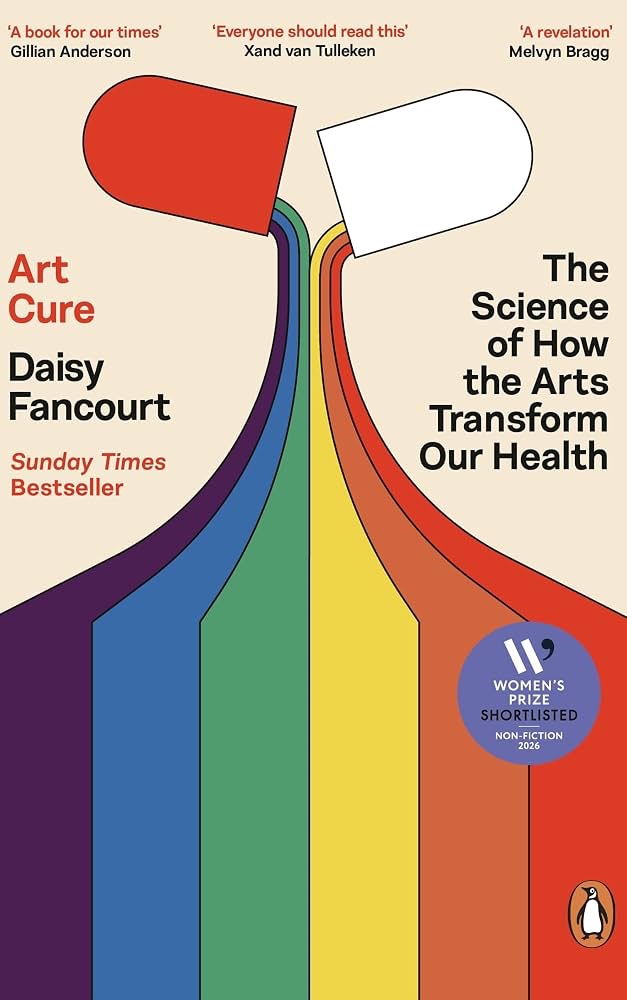
I’ve always believed that listening to music and going to concerts must have a positive effect on mental health and wellbeing. Since I spend half my time (and money) loving music, I sincerely hoped that being a music fanatic was doing me some good. After recently reading the wonderful book ‘Art Cure’ by Daisy Fancourt, I’m delighted to report that she has actual scientific proof that music makes the difference.
For those unfamiliar with Professor Daisy Fancourt, her book tells the story of how she transitioned from being a classically trained musician who worked in Arts education in hospitals to studying the impact of various cultural activities on mental health, wellbeing and longevity at University. She is now a professor at University College London and Director of the World Health Organisation Collaborating Centre on Arts and Health.
Daisy’s excellent book explores the results of many years of her research into the effects of a variety of different cultural activities on our mental health and stress levels including dancing, visiting museums, drawing, painting etc. Across all her studies the benefits of listening to music, singing and attending live music events had some of the strongest results.
First the benefit of simply listening to music, which Daisy makes it clear in her work means a specific set of time when you fully concentrate on what you’re hearing, not just having music on in the background during other activities. Just twenty minutes a day of listening to music was reported to improve sleep quality, reduce blood pressure, pain and stress. Another study in the book showed people with depression who listened to an hour of music each day improved their symptoms, and similar results have been found in people who have schizophrenia and those in recovery from strokes. Listening to music regularly has also been shown to help prevent dementia, as well as a powerful tool to support those with the condition.
Playing music, and specifically singing, is another aspect of her research. Singing alone has been shown to help both physical and mental health, while choirs are also shown to prevent loneliness and behaviour problems in children. One of the most interesting studies in the book compared singing to other social activities in a group of mothers experiencing post-natal depression. The group met every week for ten weeks, spending time singing with their babies and writing songs about motherhood. Within six weeks there was a 35 per cent decrease in depression symptoms in the singing group, and the group recovered from their depression quicker than the other groups and maintained these improvements in their mental health six months later.
Live music too comes out strongly in her research. Attending live music events regularly is shown to nearly half the risk of developing depression. The cognitive benefits of live music events weren’t as evident in those who went to the cinema, and in fact television viewing was linked to poorer cognitive outcomes. In population wide studies it was shown that those who attended live music events were less likely to become involved in anti-social behaviour. In terms of longevity those who engaged in in-person cultural activities like going to live music lived longer than others and had better health.
Fancourt’s book concludes with a powerful rallying call for arts funding, engagement and education. She also offers suggestions for what she calls social prescribing, a deliberate plan for engaging with the arts for health. I’ve adapted some of her advice specifically for music lovers below:
- Engage with music every day: Cultivate a deliberate, uninterrupted listening practice of at least twenty minutes a day.
- Get Out of the House: Attend regular in person, musical events like concerts or choirs at least every month (the more the better).
- Diversity is key and don’t be afraid of novelty – she advises mixing things up in our cultural diet. So in terms of music this could involve deliberately attending varied events and seeking out new artists and genres of performance.
- Savour Sounds & Avoid Screens: put the phone away and concentrate on listening for the full benefits. Also make sure you seek out in-person musical connections since recorded live shows are not as beneficial.
- Go it Alone: the benefits of attending live events are still maintained even if you go alone, so why not combine the art cure with the teaching of Julia Cameron’s ‘The Artist Way’ and make it a deliberate date with yourself every week.
So you can now buy that album and get those concert tickets without guilt – it’s officially doctor’s orders. Music really is medicine.
BUY the BOOK:
https://www.penguin.co.uk/books/462340/art-cure-by-fancourt-daisy/9781804950784


Leave a Reply